


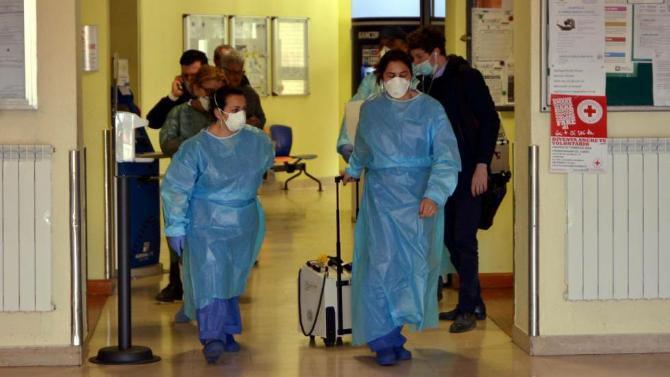

![[Img #114373]](https://iusport.com/upload/images/03_2020/969_cristian-ignacio-mir-diaz-r.png) The explosive worldwide propagation of COVID-19 and the intensive struggle of states to face it and find a soon solution have impacted harshly the sports industry. All competitions have been suspended considering the necessary and required physical contact and interaction in almost all disciplines. Indeed, the International Olympic Committee (IOC) has recently decided to postpone the Tokyo Olympic games for the 2021.
The explosive worldwide propagation of COVID-19 and the intensive struggle of states to face it and find a soon solution have impacted harshly the sports industry. All competitions have been suspended considering the necessary and required physical contact and interaction in almost all disciplines. Indeed, the International Olympic Committee (IOC) has recently decided to postpone the Tokyo Olympic games for the 2021.
Regarding sports suspension and later lockdowns and isolations, athletes have developed such an important and worthy role as public figures (notice the Jon Obi Mike case who decided to terminate unilaterally his contract and not to play longer for his club in Turkey due the unsafe conditions and decided to return his hometown in England). Those athletes performing in China or Italia, as an example, where highly valuable to illustrate the dramatic reality to come.
In this sense, one specific topic involving sports has been unnoticed (in great aspect understandable due corona crisis) but carry a lot of implications. We talk about doping fight in nowadays circumstances and the rigorousness of its methods.
Recently, the WADA (World Anti-doping Agency) has disclosure a document[1] titled “COVID-19: ADO Guidance” addressed to the Antidoping Organizations (take in mind any state who wants to be recognized by IOC must implement an ADO, in Chile was done by 19.712 act known as “Ley del Deporte”) suggesting them some guidelines to be taken into consideration while surveillance during this period.
We can notice from the very beginning, as the main message, testing and samples collections are still operative. Nonetheless, it is undoubtedly governmental measures and the concern about sportsman health and staff have made to “adjust daily operations by instituting teleworking; and, in the case of many ADOs, suspending or reducing doping control programs”. The document keeps saying “Given the differences specific to each country, it is difficult to establish one overarching set of recommendations or guidelines. However, based on information and experience to date, WADA is recommending that ADOs consider the following ‘Guidance’ regarding key elements of the World Anti-Doping Program”. Then it began to describe some general indications related to several antidoping topics, always keeping in mind athletes remain subject to all provisions and his duty of comply persist intact.
In test issues, a difference must be done according to the governmental measures: If the program can continue (could be the situation of some districts of Santiago and other cities) sanity procedural actions take place (hand wash, minimum distance, gloves, disinfections of areas, etc.) If the program can continue but the situation of the country is not fully stable, the organization should consider focusing in high risk sports and disciplines (weightlifting, cycling, etc.) If is not possibly to continue with the program the ADO should adjust measures and keep monitoring the situation in order to identified potential gaps.
In the same way, in the event any athlete contracts COVID-19 they “should be encouraged to inform the ADO who is responsible for the sample collection personnel who collected the sample so that the sample collection personnel and the laboratory”. This quote is not so clear in the sense is not mandatory and there is no certain about breaching consequences. Considering the context and the current set of duties for the athletes in doping matters, they shouldn’t be obliged to do so. To follow the authority’s procedures and protocols as any other citizen -indeed most of them are much more exposed as public figures- should be enough.
Border closures is also relevant in this problem, mainly for two reasons: The first one is the failure to comply with whereabouts duties due evident restrictions to the freedom of movement, airlines loses (notice LATAM situation) and lockdown deterring any possible travel not only from one country to another but also between cities. The WADA document doesn’t deem properly this reality due no special provisions or guidelines are given in such important matter nowadays and just acknowledges: “ADOs should continue to collect whereabouts from athletes in whereabouts pools to monitor their movements during the pandemic as it can be useful information and intelligence”.
The above mentioned reflects a lack of context and contingency understanding, scenario in where no movements or trips are permitted or are, at least, highly difficult (so perhaps would be reasonable to stop demanding whereabouts for a temporary period) and also most of the athletes are isolated in their domiciles (the fact outsiders chilean olympic competitors came home just confirm it). Intelligence and Information aims for whereabouts reports just bring more uncertainty.
Second reason has to do with sample collection. Border closures prevents huge amounts of samples to be delivered in time to international laboratories (as a matter a fact lots of them have temporary suspended operations). Curiously here WADA recognize the lack of transport and movement contrary as shown before and suggest each ADO to deal with the problem designing methods to guarantee the chain custody and the integrity of samples. This could represent (again the problem of consider this mandatory or not) such a problem for ADO´s not fully prepared being them unable to maintain certain technical requirements and standards in the storage of urine or blood , for example.
To conclude, the document issued highlights, unless mandatory restriction are establish by national governments, athletes remain to be subject to tests “any place, any time” and that “WADA fully acknowledges the complexities of this unprecedented situation and will ensure its compliance monitoring program provides a level of flexibility and understanding based on the circumstances. Deadlines for reporting, meeting ongoing requirements or completing corrective actions may be affected.” This could have been more accurate in the sense is not so clear who is getting benefit of this; athletes or the system paperwork? Let’s hope are the first ones.
Even though the document proposes several good guidelines to take into account, seems not to be enough at all. In circumstances in which the entire society is manifesting deep human changes and where we are rethinking vital issues as a species, anti-doping regulation and implementation remains rigid and excessively strict with athletes, even more so at times when there are not sports competitions. Let´s us hope that the anti-doping authorities can apprehend this new context in its full dimension and start to be able to offer more than a dubious "level of flexibility".
The absence of sports competitions raises another challenging question: Should we estimate that this period of stoppage is counted in the suspensions of those athletes who have been convicted as ineligible (suspended) for a certain period of time?
Such situation is not regulated in the World Anti-Doping Code because there is no concept as force majeure and the truth is that no one could reasonably have anticipated a pandemic of these magnitudes at the time of drafting the code (which will certainly be modified for 2021, in what will represent a tremendous year for Olympism). But it is not necessary to have expressly regulated it to answer the question, since an exercise in interpreting some of its articles gives us, in our opinion, the solution.
In these state of affairs, article 10.11 about “Commencement of Ineligibility Period” says: “Except as provided below, the period of Ineligibility shall start on the date of the final hearing decision providing for Ineligibility or, if the hearing is waived or there is no hearing, on the date Ineligibility is accepted or otherwise imposed.”
In the same way, article 10.12 of “Status during ineligibility” stablish: “No Athlete or other person who has been declared Ineligible may, during the period of Ineligibility, participate in any capacity in a competition or activity”.
Both articles, stands on the concept of time-period as consequence of an antidoping violation no making any distinction within about the existence of competitions or not. There is a famous spanish law aphorisms which says “Where the legislator don’t distinguishes it’s not valid to distinguish” basically showing it is not possible to discuss the absence of official competitions for the imputation of the time period. If the sanction would have been for a specific event or competition that could have been different (as is the cases regarding disciplinary sanctions imposed by FIFA for infractions of regulations in where suspensions are imposed for a certain number of matches taking into account the seriousness of the offense and other criteria) as there is no doubt that until the competition resumes the sanction cannot be comply.
To consider the opposite regarding the initial question, would somehow mean to punish twice for the same conduct violating the principle of criminal law “Non bis In idem” (many similitudes are found in the design of both systems, the standard of proof required of conviction beyond of any reasonable doubt is another one). This is reinforced by the fact the suspension not only precludes the participation of professional events but also forbids the use of training camps, participation in exhibitions or activities organized by clubs or federations, among others.
In a hypothetical exercise, a suspended athlete continues to be subject to the above prohibitions regardless of suspension of professional activities due coronavirus, in what could be considered as a kind of complementary sanction. If he finds himself complying with such prohibitions specifically for this conviction and not for the impediments of the coronavirus (in Chile, if all healthy measures are taken we can still imagine the scenario of an athlete wanting to attend a training camp and he would be still theoretically able to do so, at least in some districts) is because he is clearly complying with the sanction, the deadline is being counted and the period of time continues to run. To estimate the opposite, as pointed out before, would be to excessively harm athletes and even unreasonably delay their constitutional right to work.
This is also demonstrated by the well-known case of Paolo Guerrero, where his sanction was considered, in some way, "deferrable in time" and through a provisional measure he was allowed to "begin" to comply with the suspension precisely after the conclusion of the 2018 World Cup in Russia.
Its desirable this to be the predominant position for the good of athletes and that entities regulating sports transparency and integrity, starting with WADA, know how to rise the challenge and face this unprecedented world sports scenario, for the sake of sports future and why not, of humanity.
Cristián Ignacio Mir Díaz
Abogado
Pontificia Universidad Católica de Chile
Master International Sports Law Universidad Europea-Real Madrid.
[1] Available in: https://www.wada-ama.org/sites/default/files/resources/files/20200320_covid-19_update_en.pdf








Normas de participación
Esta es la opinión de los lectores, no la de este medio.
Nos reservamos el derecho a eliminar los comentarios inapropiados.
La participación implica que ha leído y acepta las Normas de Participación y Política de Privacidad
Normas de Participación
Política de privacidad
Por seguridad guardamos tu IP
216.73.216.164